In Ehime, we have a distinctive dialect, Iyo-ben, which chiefly consists of adding the interjection “ken” on most utterances, and replacing the “so” sound with “ho”. Consequently, the standard Japanese phrase “so nan desu kedo” meaning “but anyway…”, becomes “hoya ken”. Pepper your speech liberally with “hoya ken", and people will soon begin to think you were born here. There’s even a bar called Hoya Ken in Matsuyama.
Hoya ken … Ehime is one of the four prefectures on the island of Shikoku in southwestern Japan. Shikoku means “four countries”, and today’s prefectures correspond to the four domains that existed in Japan’s feudal age. Feudal Ehime was known as Iyo, and “Iyo” is still found in many place names here today. The kanji characters for Ehime are “love” and “maiden”. Much play is made of this association with love, and you’ll see a lot of heart symbols in Ehime in one context or another. The prefectures bordering Ehime are Kochi to the south, and Kagawa and Tokushima to the east.
Ehime is located in the northwest corner of Shikoku. The prefectural capital, Matsuyama, faces Hiroshima across the Seto Inland Sea. The southern part of Ehime faces Kyushu across a strip of sea called Uwakai. From the south, the major cities of Ehime are Uwajima, Seiyo, Yawatahama, Ozu, Iyo, Matsuyama, Toon, Imabari, Saijo, Niihama, and Shikokuchuo. Of these, only Seiyo, Ozu and Toon are not coastal cities. These cities are linked by the JR railway line that terminates in Uwajima and which links Shikoku to the main island of Honshu. Ehime is joined to Hiroshima Prefecture on Honshu by the Shimanami Kaido road which crosses the Inland Sea over a picturesque series of bridges and islands.
There are a number of transportation links between Ehime and the rest of Japan. Matsuyama has an airport with flights to Osaka, Tokyo, and other cities. There are also direct flights to Seoul and Shanghai. Ehime is linked by a number of car ferry and express ferry routes to Honshu and Kyushu islands. A two lane expressway is gradually pushing down into Ehime from east to west. For travel within Ehime itself, having a car is very useful for getting to places off the arterial coastal transportation routes.
The industry of Ehime has long been based on agriculture, forestry and fisheries. Related industries are pottery, tiles, paper, textiles, pearls and shipbuilding. Ehime vies with another prefecture, Wakayama, as Japan’s top producer of citrus fruit or “mikan”. In early summer, every part of Ehime is redolent of the slightly acerbic, soapy scent of citrus flowers. These flowers also appear on the prefectural flag, attesting to the pride and attachment the people of Ehime have for their mikan. Mikan is also the branding theme for Ehime’s professional sports teams, the Ehime Mandarin Pirates baseball club and Ehime Football Club, whose vulgar citrus mascot drools orange juice.
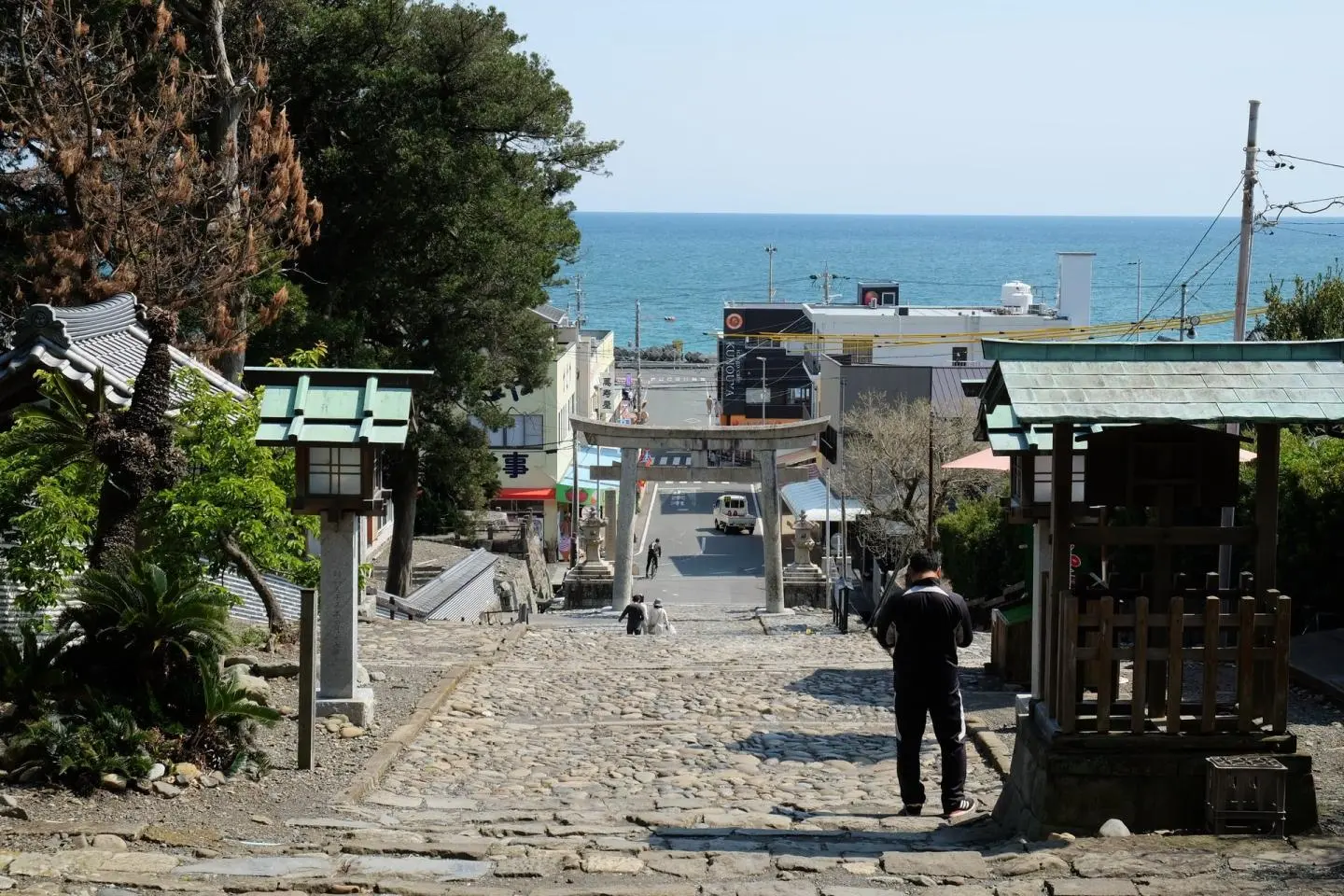
Ehime is home to a number of distinctive Shinto festivals. The southern part of Ehime has a traditional interest in bulls. Bull ‘sumo’ is held in Uwajima, and there’s also a festival celebrating Ushioni or ‘bull devils’. Seiyo has a mud festival involving the bulls once used for plowing rice fields. In Matsuyama and Saijo, people dress up in koikuchi, a kind of motley pajama outfit, and enjoy running huge festival floats up and down the streets and into rivers. They also take huge omikoshi ‘god boxes’ and smash them together, or throw them down the steps of Shinto shrines. Buddhism, which finds all this foolish, also has a central place in Ehime life. Shikoku is the site of a pilgrimage, with an ancient route that visits 88 temples spread throughout the island. Pilgrims in their traditional white garb, with cone hats and staffs, can be seen making their way between temples in Ehime.
There is of course much more to discover about an area as wide as Ehime, and an overview of this type can’t possibly do it justice. You must come to Ehime and experience it all for yourself. Wakatta ken? – You got that?